Mold making is usually the longest and most expensive step in a custom doll program. Cost and lead time are driven by size, complexity, surface detail, prototype rounds and whether the mold is exclusive. Ownership must be agreed in writing before work starts. This guide explains the process, the cost drivers and the clauses buyers should settle early.
It is written for brand owners and distributors evaluating an ODM or exclusive mold project. It does not replace legal advice; contract terms should be reviewed by your own counsel.
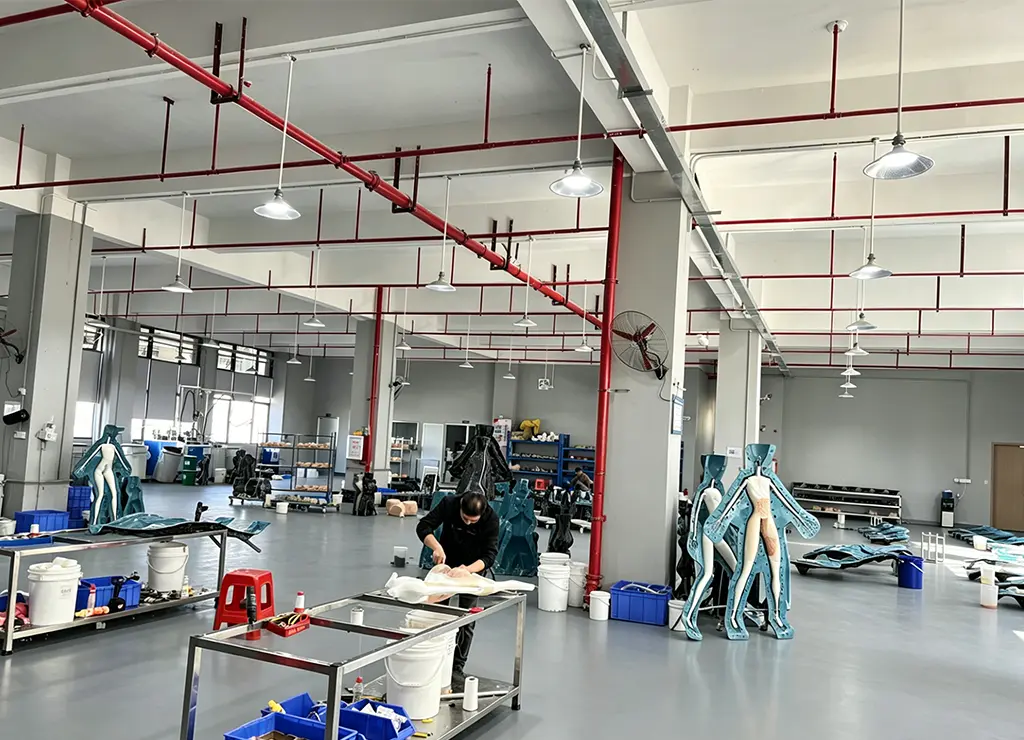
Mold ownership, exclusivity and revision rounds should be agreed before the first cut.
What "mold making" means in doll production
A doll program can involve several molds: a body mold, a head mold, and sometimes separate molds for removable parts or accessories. The exact method depends on the factory, material and product design. Most projects start with a master pattern, then move to a production mold that can be used repeatedly.
Buyers often use the word "mold" to cover three different things:
- Master pattern: the sculpt or model used to create the mold.
- Production mold: the tool used to cast saleable units.
- Test cast: a sample pulled from the mold to check dimensions, surface and fit.
Ask the factory to define which of these is included in the quotation. A price for "a mold" without a scope is not comparable.
The mold development process
- Design brief and reference review. The buyer provides measurements, reference images, material and feature requirements.
- Feasibility review. The factory checks whether the design can be molded, demolded, painted and packed at the target cost.
- Master creation. A 3D model, clay sculpt or modified existing platform is prepared, depending on the project.
- Mold construction. The mold is built around the master, with allowances for material shrinkage, demolding and assembly.
- Test cast. A first casting is checked for proportions, surface detail, seam placement and fit.
- Revision rounds. The buyer reviews photos or the physical cast and requests changes within the agreed scope.
- Production mold approval. The mold is accepted and released for bulk production.
The number of revision rounds is a commercial term. Unlimited revisions sound generous but can hide an unclear brief and delay the project. Define what counts as a revision and what counts as a new scope.
What drives mold cost
| Cost driver | Why it matters |
|---|---|
| Size and volume | A full-body mold uses more material, space and handling time than a torso or head mold. |
| Surface detail | Fine skin texture, hands, feet and facial detail increase sculpting and mold work. |
| Number of parts | Removable heads, inserts, accessories and multi-piece bodies add tooling. |
| Prototype rounds | Each additional cast and revision consumes labor and machine time. |
| Material and process | The mold material and casting process affect durability, finish and cycle time. |
| Exclusivity | A mold reserved for one buyer may require a higher contribution than a shared platform. |
| Documentation | Measurement reports, test casts and approval records add engineering time. |
Do not compare mold quotes without the same scope. One quote may include only the body mold; another may include head, test casts, packaging tooling and two revision rounds.
What drives lead time
- How quickly the design is frozen
- Whether the project starts from an existing platform or a new sculpt
- Complexity of the face, hands, feet and surface texture
- Number of test casts and revision rounds
- Factory production queue and material availability
- Approval speed on the buyer side
A realistic schedule includes review time. A factory can control its own workload, but it cannot control a buyer who returns feedback in five separate emails over three weeks. Consolidate comments into one approval document with a named decision-maker.
Who owns the mold?
There is no single market standard. The answer must be written into the contract. Common models include:
| Model | What it means | What to clarify |
|---|---|---|
| Factory-owned | The factory owns the tool and may use it for other clients. | Whether the buyer has exclusivity, for how long and in which markets |
| Client-owned | The buyer pays for the tool and owns it. | Storage, maintenance, access, transfer and destruction rights |
| Shared or exclusive | The tool is used for one buyer or a limited group under agreed terms. | Minimum volume, exclusivity period, renewal and termination |
Ownership is not only a legal question. It affects what happens if you change factories, pause production or want a second source. Ask where the mold will be stored, who pays for maintenance and what condition it must be returned in.
NDA, exclusivity and derivative works
An NDA protects confidential information; it does not automatically give you exclusive rights to a model. Exclusivity is a separate commercial term. Define:
- The exact model, head, body and modifications covered
- The markets or sales channels covered
- The exclusivity period and renewal conditions
- Minimum order volume or development contribution
- What happens if the minimum is not met
- Whether the factory may sell a similar but not identical model
- Who owns sketches, 3D files, masters and test casts
Put the scope in an annex with photos and measurements. "Similar" is not a useful contract word.
Mold maintenance and lifecycle
A production mold is a tool, not a permanent asset. It needs cleaning, inspection, repair and eventually replacement. Ask the factory:
- How many casts a mold is expected to produce before refurbishment
- How mold wear is detected and recorded
- Who pays for routine maintenance and repairs
- How the mold is stored between production runs
- What happens if the mold is damaged or lost
- Whether a backup mold or master is retained
For a long-term program, mold maintenance records are as important as the original mold price. They explain why one reorder matches the approved sample and another does not.
Buyer checklist before paying for a mold
- Written scope: body, head, parts, test casts and revision rounds.
- Deliverables: 3D files, master, production mold, test cast, measurement report.
- Ownership and exclusivity terms, including territory and duration.
- Timeline with buyer approval deadlines.
- Payment milestones tied to deliverables, not only calendar dates.
- Acceptance criteria and who signs off.
- Storage, maintenance, transfer and destruction terms.
- What happens if the project is cancelled or paused.
Our OEM contract checklist covers related clauses, and our OEM cost breakdown explains how tooling fits into the total project budget.
Frequently asked questions
How long does a silicone doll mold take?
It depends on whether the design starts from an existing platform or a new sculpt, the size and detail, the number of test casts and the factory queue. Ask for a milestone schedule after the design is frozen.
Why are mold quotes so different between factories?
Quotes often cover different scopes: body only versus body and head, one test cast versus several, or shared versus exclusive tooling. Compare line items, not just the total.
Can I own the mold if I pay for it?
Ownership depends on the contract. If you pay for tooling, ask for explicit ownership, access, storage, maintenance and transfer terms. Do not assume payment alone transfers ownership.
Does an NDA give me exclusivity?
No. An NDA protects confidential information. Exclusivity is a separate commercial term that should define the model, market, duration and minimum volume.
Can I move my mold to another factory?
Only if the contract allows it and the mold is in a transferable condition. Confirm storage location, packaging, condition records and any outstanding payments before requesting a transfer.
To discuss an ODM or exclusive mold project, review our OEM/ODM services and customization options, then contact our team with your concept, target market and volume plan.
Last updated: 27 October 2026. This guide is general commercial information, not legal advice. Mold ownership and exclusivity terms should be reviewed by your legal counsel.