Quality control for sex dolls works best as a staged system: incoming material checks, in-process inspection, final AQL inspection and pre-shipment carton review. The goal is not to catch every defect at the end, but to stop predictable defects at the step that creates them.
This guide is written for distributors, brand owners and sourcing teams who need a repeatable QC process. It explains the inspection gates, how AQL sampling works, what a useful QC report contains and how to verify a factory before a bulk order.
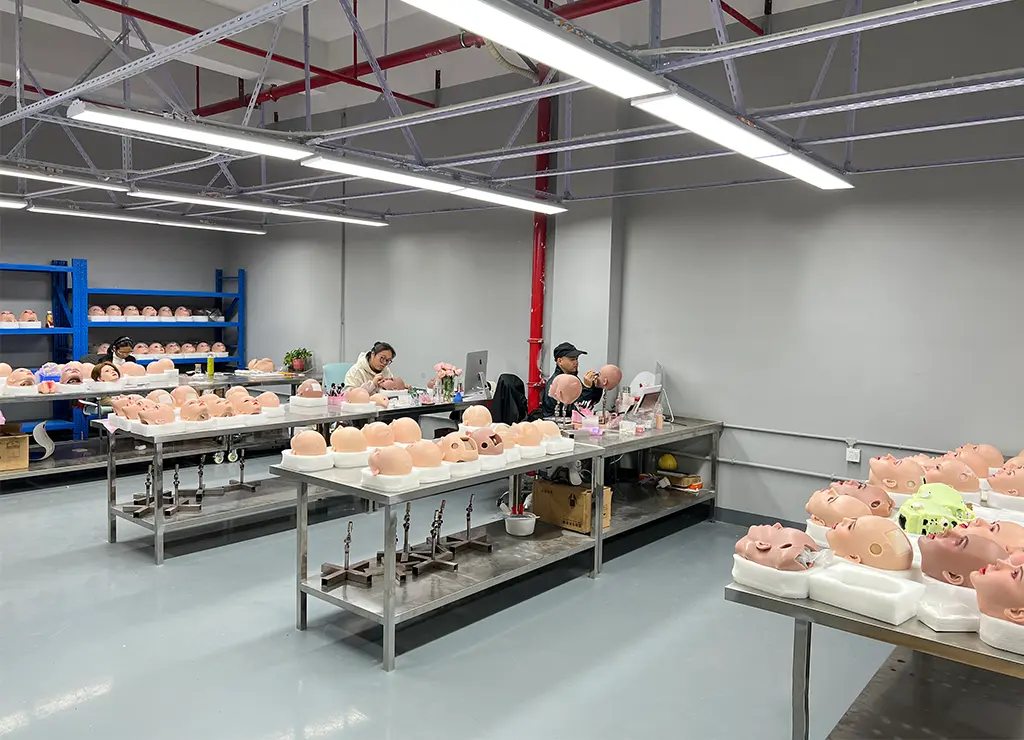
Factory audit and QC records should be available before a bulk order is placed.
Why sex doll QC is different from a standard consumer product
A doll combines several production systems in one item: a molded body, a metal skeleton, a painted head, hair, eyes, cosmetic finishing and retail packaging. A defect can come from any of them, and some defects only appear after assembly or after a few pose cycles.
Three characteristics make QC harder than a typical consumer product:
- Hand finishing creates variation. Skin tone, blush, seams and hair are partly manual. The approved sample, not a color swatch alone, becomes the reference.
- Weight and balance affect handling. A doll that is visually correct but poorly balanced will create complaints after delivery.
- Packaging is part of the product. Compression marks, pressure points and inadequate foam can damage a doll that passed final inspection.
The four inspection gates
A documented program separates checks by production stage. The exact format varies by factory, but the logic should be visible in the QC record.
| Gate | What is checked | Typical record |
|---|---|---|
| 1. Incoming material | Silicone or TPE batch, pigment, skeleton components, eyes, hair, packaging materials | Material batch ID, supplier, receiving date, visual check, test result if required |
| 2. In-process | Mold release, casting, demolding, seam trimming, skeleton assembly, joint movement | Station check, defect code, rework action, operator and date |
| 3. Final inspection | Dimensions, weight, skin surface, paint, hair, eyes, joints, standing stability, accessories | AQL sample plan, defects found, accept/reject decision, photos |
| 4. Pre-shipment | Carton strength, foam protection, labels, manuals, barcode, privacy marking, pallet condition | Carton audit, drop or compression check where applicable, shipping photos |
How AQL sampling works
AQL means Acceptable Quality Limit. It is a sampling method, not a promise that every unit is perfect. The buyer and supplier agree a lot size, inspection level, sample size and acceptance number. If the number of defects in the sample exceeds the limit, the lot is rejected or screened.
Many adult-product programs use a plan such as AQL 2.5 for major defects and AQL 4.0 for minor defects, with critical defects having zero acceptance. That is an example, not a universal rule. The correct plan depends on your market, product price and customer expectations, and it should be written into the purchase order.
| Decision | What it should define |
|---|---|
| Lot size | The number of units in one inspection lot, usually one model or one production run |
| Sample size | How many units are pulled randomly from the lot |
| Accept / reject number | The maximum number of defects allowed before the lot is rejected |
| Inspection level | Normal, tightened or reduced, based on the supplier's history |
| Defect definitions | Photo examples of critical, major and minor defects for that model |
Important: AQL does not replace a pre-production sample. It controls a production lot against an approved reference. Without a signed sample and a written specification, the inspector has no stable standard.
Defect classification that buyers and factories can both use
| Class | Examples | Typical action |
|---|---|---|
| Critical | Unsafe material, sharp metal exposure, structural failure, wrong model or wrong size, prohibited labeling | Reject the unit or lot; root-cause review before shipment |
| Major | Visible seam split, serious paint mismatch, joint that cannot hold a pose, significant weight deviation, damaged packaging that exposes the product | Rework, replace or credit according to the contract |
| Minor | Small cosmetic variation, slight blush difference, minor hair styling difference, carton scuff that does not affect protection | Accept within the agreed limit or rework if practical |
The classification should include photos. "Major" means different things to a factory and a retailer; a photo library removes that ambiguity.
What a useful QC report should contain
- Purchase order, model, batch or lot ID and production date
- Sample size, inspection level, AQL values and accept/reject numbers
- Measurements and weight against the approved specification
- Defect list with classification, location, photo and disposition
- Final result: pass, pass with deviation, rework or reject
- Inspector name, date and signature
- Corrective action and preventive action for repeated defects
A report that only says "QC passed" is not useful. The buyer should be able to see what was checked, what was found and what changed.
How to verify a factory before you order
- Ask for the QC procedure, not just a certificate. Look for stages, sampling rules, defect definitions and record templates.
- Review a real QC report with the commercial data redacted. Check whether defects and corrective actions are recorded honestly.
- Book a factory video tour and ask to see the inspection area, measurement tools, approved samples and packing line.
- Run a paid sample and compare it with the written specification, not only with marketing photos.
- Use a third-party inspection for the first bulk order if your volume justifies it. Agree the inspection standard in advance.
For a broader supplier check, see our factory audit checklist. For contract terms, see the 12 clauses to verify in a sex doll OEM contract.
Common failure points in sex doll production
- Seams and mold lines that open after packing or during first use.
- Paint and blush that do not match the approved head under daylight.
- Skeleton joints that are stiff, loose or noisy after a few pose changes.
- Weight deviation that changes handling, freight cost and customer expectations.
- Packaging pressure that leaves marks on the skin or deforms the body.
- Label and manual errors that create customs or customer-service problems.
Each failure point should have an owner, a check and a record. A defect that is found but not assigned is likely to repeat.
What to put in the purchase order
- Model, measurements, weight tolerance and material
- Approved sample ID and photo set
- AQL plan and defect classification
- Packaging, labeling and carton marking requirements
- Inspection timing and who attends
- Remedy for rejected lots: rework, replacement, credit or return
- Records to be provided before shipment
Clear QC terms protect both sides. They also make conversations with a new factory much faster, because expectations are visible before production starts.
Frequently asked questions
What does AQL mean in sex doll inspection?
AQL is the Acceptable Quality Limit used in sampling inspection. It defines how many defects are allowed in a sample before a lot is rejected. It is not a **** inspection guarantee.
How many units are inspected in a bulk order?
The sample size depends on lot size, inspection level and the agreed AQL. The plan should be written into the purchase order before production, not decided after the goods are finished.
Can I use a third-party inspection company?
Yes. Many buyers use a third-party inspector for the first bulk order. Share the specification, approved sample photos and AQL plan in advance so the inspector checks against your standard.
What is the difference between a major and minor defect?
A major defect affects function, safety, visible appearance or the customer's willingness to accept the product. A minor defect is a small cosmetic or packaging issue that does not affect use. Photo examples should be agreed in advance.
How do I verify QC records before shipment?
Ask for the final inspection report, defect photos, carton audit and a short video of the packed lot. Compare the report with the purchase order and the approved sample. If something is missing, resolve it before the container is sealed.
CoolMate's OEM process includes incoming material checks, in-process inspection and final AQL inspection before packing. You can review our factory capability, certifications and OEM/ODM process, or contact our export team with your model and QC requirements.
Last updated: 27 October 2026. This guide is for general B2B planning; final inspection terms should be agreed in your purchase contract.